If you or someone you love has ever been kept awake by loud snoring or woken up feeling exhausted despite a full night of sleep, you already know how disruptive these issues can be. What many people do not realize is that snoring and more serious conditions like sleep apnea are not always the same thing, and choosing the right solution starts with understanding the difference.
Navigating the world of snoring and sleep apnea treatment can feel overwhelming, especially when you are encountering terms like CPAP machines, oral appliances, and positional therapy for the first time. The good news is that you do not need a medical degree to make sense of your options.
In this post, we will break down the most common treatments available today, compare how they work, and help you understand which approaches might be best suited for different situations. Whether you are a light snorer or someone recently diagnosed with sleep apnea, this guide is designed to give you a clear, straightforward starting point on your journey toward better sleep.
How ENT Specialists Evaluate Snoring and Sleep Apnea
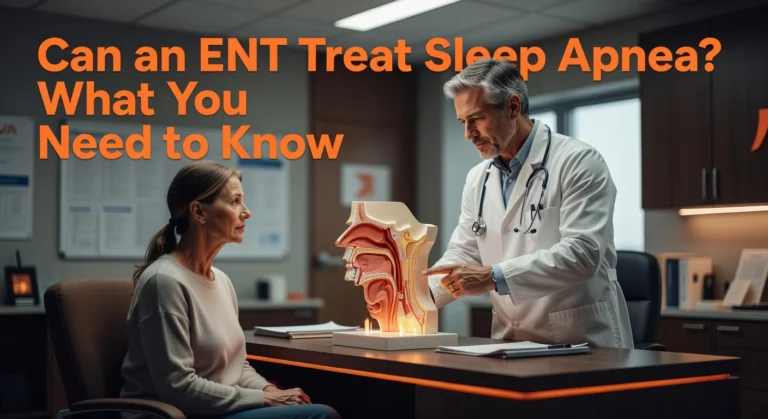
When it comes to snoring and sleep apnea treatment, understanding the root cause matters just as much as choosing the right solution. ENT specialists, also known as otolaryngologists, are uniquely trained to assess the structural and anatomical factors that contribute to airway obstruction during sleep. Issues like a deviated septum, enlarged tonsils, or nasal congestion from chronic allergies can narrow the upper airway significantly, making it more likely to collapse when throat muscles relax at night. According to research, anatomy plays a direct role in shaping obstructive sleep apnea risk, and identifying those structural contributors early can meaningfully change the course of treatment.
To pinpoint the source of airway collapse, ENT specialists rely on tools like in-office nasal endoscopy, which uses a small flexible scope to visualize the nasal passages, throat, and soft palate in real time. This is often combined with a sleep study, either conducted in a lab or through a home sleep test, to measure how often breathing pauses occur during sleep and how severe the oxygen drops are. ENT specialists use this combination of structural exam and sleep data to build a complete clinical picture, rather than relying on symptoms alone.
A structural evaluation should happen before any treatment decision is made, whether that means starting CPAP therapy, trying an oral appliance, or pursuing surgery. For example, a patient with severe nasal obstruction may struggle to tolerate CPAP simply because airflow through the nose is blocked. Treating that obstruction first can dramatically improve outcomes. Comorbidities like allergic rhinitis and chronic sinus disease are also commonly assessed, since nasal inflammation from these conditions directly worsens airway resistance and OSA severity.
The traditional path to ENT care often involves a primary care referral, followed by weeks of waiting before a specialist appointment. ENT Urgent Care eliminates that delay with same-day, walk-in access to ENT evaluation, including assessment for snoring, nasal obstruction, allergies, and sinus conditions, all in one visit and with no referral required. If you are dealing with snoring or suspect sleep apnea, contact ENT Urgent Care today to get a thorough evaluation without the wait.
Lifestyle Changes: The Foundation of Any Treatment Plan
Before exploring devices, medications, or surgical options, addressing modifiable lifestyle factors forms the essential groundwork for any effective snoring and sleep apnea treatment plan. Leading organizations including the NHLBI and the American Academy of Sleep Medicine recommend these changes for all patients, regardless of which additional therapies are pursued.
Weight loss is among the most impactful lifestyle interventions available. Excess weight, particularly fat deposits around the neck and upper airway, physically narrows the passage and increases the likelihood of collapse during sleep. Research suggests that roughly a 10% reduction in body weight can produce meaningful decreases in apnea severity. A significant development arrived in late 2024 when the FDA approved tirzepatide (Zepbound) as the first medication specifically indicated for moderate-to-severe OSA in adults with obesity, based on clinical trial data showing substantial reductions in apnea events alongside significant weight loss. According to the NHLBI’s sleep apnea treatment overview, weight management remains a core recommendation across all severity levels.
Positional therapy offers a practical, low-risk option for patients whose symptoms worsen when sleeping on their back. In this position, gravity pulls the tongue and soft tissues toward the throat, narrowing the airway. Techniques range from specialty pillows to wearable vibration devices that prompt side-sleeping. For patients with position-dependent OSA, this approach can reduce apnea events by 40 to 50 percent in some cases, and recent research suggests sustained behavioral change is possible after consistent use.
Reducing alcohol and sedatives is another straightforward but often overlooked strategy. Both substances relax the muscles that keep the upper airway open, blunting the body’s natural response to airway obstruction and prolonging apnea events. Studies indicate that alcohol can increase apnea events by several episodes per hour, even in moderate amounts consumed close to bedtime. Avoiding alcohol for at least a few hours before sleep and minimizing sedative use where medically appropriate can produce noticeable improvements.
Exercise, sleep hygiene, and smoking cessation round out the evidence-based lifestyle measures. Regular aerobic activity has been shown to reduce apnea severity even without significant weight loss, while consistent sleep schedules and a cool, quiet sleep environment support overall treatment effectiveness. Smoking inflames and irritates the upper airway tissues, worsening both snoring and obstruction, making cessation a worthwhile goal for multiple health reasons.
It is important to recognize the limitations of lifestyle changes when used alone. For moderate-to-severe OSA, these measures are rarely sufficient as a standalone treatment. Anatomical factors, such as a deviated septum or enlarged tonsils, persist regardless of behavioral changes. Current clinical guidelines consistently emphasize combining lifestyle strategies with primary therapies for meaningful symptom control and risk reduction.
Next Steps
Understanding where lifestyle modifications fit into your overall care plan is an important first step, but determining which combination of treatments is right for you requires a professional evaluation. If snoring or suspected sleep apnea is affecting your quality of life, the team at ENT Urgent Care can provide same-day, walk-in assessments without a referral. Visit enturgent.com to find a location near you and take the first step toward better sleep.
CPAP and BiPAP Therapy: The Clinical Gold Standard
For patients diagnosed with moderate-to-severe obstructive sleep apnea, continuous positive airway pressure therapy, commonly known as CPAP, remains the most widely prescribed and clinically validated first-line treatment available. Major clinical bodies, including the American Academy of Sleep Medicine, consistently recommend CPAP as the gold standard based on decades of evidence showing its effectiveness in reducing apnea events, improving daytime alertness, and lowering associated risks for cardiovascular complications.
How CPAP Works
CPAP machines deliver a continuous stream of pressurized air through a mask worn over the nose, mouth, or both during sleep. This steady airflow acts as a pneumatic splint, gently holding the upper airway open and preventing the soft tissues of the throat, including the tongue, soft palate, and uvula, from collapsing inward. The result is uninterrupted breathing throughout the night, reduced snoring, stable oxygen levels, and more restorative sleep overall. The pressure level is typically determined through a sleep study and titrated to each patient’s specific needs.
The Adherence Challenge
Despite its effectiveness, roughly half of CPAP users struggle with long-term adherence. Common barriers include mask discomfort, feelings of claustrophobia, noise from the machine, and difficulty tolerating the constant air pressure during exhalation. For many patients, these challenges lead to inconsistent use or abandonment of therapy altogether, which is why finding the right fit and setup with a qualified provider matters significantly.
BiPAP and APAP as Alternatives
For patients who cannot tolerate fixed CPAP pressure, bilevel positive airway pressure therapy, known as BiPAP, offers a practical alternative. BiPAP delivers a higher pressure during inhalation and a lower pressure during exhalation, making breathing feel more natural. It is particularly useful for individuals with complex or central sleep apnea, obesity hypoventilation syndrome, or those requiring higher therapeutic pressures. Auto-adjusting CPAP, or APAP, represents another modern advancement. These devices dynamically shift pressure levels throughout the night based on real-time airway feedback, reducing unnecessary pressure during lighter sleep stages and improving overall comfort. According to SleepApnea.org, modern PAP devices also incorporate heated humidification, quieter motors, and app-based tracking to support long-term compliance.
Next Steps
Choosing between CPAP, BiPAP, and APAP is not a one-size-fits-all decision. It depends on your diagnosis, pressure tolerance, sleep study results, and any underlying conditions. If you are experiencing symptoms of sleep apnea or struggling with your current therapy, the specialists at ENT Urgent Care can help. With same-day, walk-in appointments available and no referral required, getting the expert evaluation you need has never been more straightforward. Visit enturgent.com or walk in today to take the next step toward better sleep.
Oral Appliance Therapy: A CPAP Alternative for Mild to Moderate OSA
For patients who struggle with CPAP compliance or who have been diagnosed with mild-to-moderate obstructive sleep apnea, oral appliance therapy offers a clinically supported and more comfortable path forward. The most widely used type is the mandibular advancement device, or MAD, which works by gently repositioning the lower jaw slightly forward during sleep. This forward movement stabilizes the surrounding soft tissues and tongue, keeping the upper airway open and reducing the collapse that causes both snoring and breathing interruptions. The mechanism is straightforward, and for many patients, the results are meaningful.
The American Academy of Sleep Medicine recommends oral appliance therapy for adults with OSA who are intolerant of CPAP or who prefer an alternative treatment approach. This recommendation is particularly relevant for those with mild-to-moderate OSA, typically defined as an apnea-hypopnea index of 5 to 30 events per hour. Importantly, these guidelines specify that a custom-fitted, titratable appliance made by a qualified dental sleep medicine provider should be used rather than generic over-the-counter options. Custom devices allow for precise jaw advancement adjustments, better retention, and improved long-term outcomes. Over-the-counter boil-and-bite devices, by contrast, often fit poorly and may reduce snoring without adequately addressing the underlying OSA, which can create a false sense of security.
Pros and Cons at a Glance
Oral appliances offer several practical advantages that explain their growing adoption. They are small, portable, and require no electricity or mask hardware, making them especially convenient for travel. Adherence rates for oral appliances often range from 70 to 90 percent, compared to roughly 50 percent for long-term CPAP use, and higher nightly use translates to better real-world outcomes even when AHI reductions are sometimes smaller than those achieved with CPAP.
That said, oral appliances are not without limitations. Some patients experience jaw soreness, increased salivation, or temporary bite discomfort during the adjustment period. With long-term use, there is a risk of gradual occlusal changes, meaning shifts in how the teeth align, which requires ongoing monitoring by a dental professional. Oral appliances are also generally less effective for severe OSA cases, and they are not suitable for patients with significant dental or jaw joint issues.
Understanding which treatment fits your specific diagnosis requires a proper evaluation. The team at ENT Urgent Care offers same-day, walk-in appointments with no referral needed, so you can get expert guidance on your snoring and sleep apnea treatment options without the typical wait. Visit enturgentcare.com or walk into a location near you to take the first step toward better sleep.
Surgical Treatments for Snoring and Sleep Apnea
When lifestyle adjustments, CPAP therapy, or oral appliances do not adequately address a patient’s condition, surgical intervention becomes a relevant consideration. Surgical treatments for snoring and sleep apnea work by targeting the specific anatomical areas where airway obstruction occurs, and the right procedure depends entirely on where that obstruction is located.
Septoplasty is a common surgical option for patients whose snoring or sleep apnea is worsened by a deviated nasal septum. The septum is the wall of cartilage and bone that divides the two nostrils, and when it is misaligned, it narrows one or both nasal passages. This increases airway resistance, promotes mouth breathing during sleep, and can reduce CPAP effectiveness. Septoplasty straightens the septum to improve nasal airflow. It is often combined with turbinate reduction for better results, though it typically functions as an adjunct to other treatments rather than a standalone cure for moderate or severe OSA.
Tonsillectomy and adenoidectomy are frequently the first surgical recommendation when enlarged tonsils or adenoids are contributing to airway blockage. In children, this combination procedure is considered a primary treatment for pediatric OSA and often produces significant improvement in sleep quality, behavior, and daytime alertness. In adults with visibly enlarged tonsils, it can be equally effective, particularly when other therapies have failed.
Uvulopalatopharyngoplasty (UPPP) addresses the soft palate, which is a leading obstruction site in many OSA patients. The procedure removes or repositions excess tissue at the back of the throat to widen the upper airway. For patients who require a less invasive path, radiofrequency ablation and palate stiffening procedures offer outpatient-friendly alternatives with shorter recovery times. These techniques use controlled energy to shrink or stiffen soft tissue, reducing the vibration that causes snoring and mild airway collapse. According to recent research covered by Mayo Clinic, the surgical landscape continues to evolve with new minimally invasive options becoming available.
Ultimately, surgical candidacy is determined through a thorough ENT evaluation that identifies the precise site of obstruction. No two patients present identically, which is why personalized assessment remains central to effective OSA care.
Next Steps
If you are unsure whether surgery is the right direction, the most important first step is a proper evaluation. ENT Urgent Care offers same-day, walk-in appointments with no referral required, making it easier than ever to get expert answers quickly. Visit enturgent.com to find a location near you and take the first step toward better sleep tonight.
Hypoglossal Nerve Stimulation: The Expanding CPAP Alternative
For patients who cannot tolerate CPAP or who have tried it without success, hypoglossal nerve stimulation has emerged as one of the most promising and fastest-growing categories in snoring and sleep apnea treatment. This approach uses a small implanted device to deliver mild electrical pulses to the hypoglossal nerve, which controls tongue movement. During sleep, the device activates the tongue and surrounding airway muscles to move forward slightly, preventing the airway collapse that causes obstructive sleep apnea.
The Three Key Systems in This Category
Inspire Upper Airway Stimulation is the most established option in this space, having received FDA approval in 2014 and since been implanted in over 100,000 patients worldwide. The system includes an implanted pulse generator, a breathing sensor, and a stimulation lead placed on the hypoglossal nerve. Long-term studies show sustained reductions in apnea events and high nightly usage rates, making it a compelling option for patients who struggled with CPAP consistency.
The Genio system received FDA approval in 2025 and offers a distinctly different design. Rather than a chest-based generator, it uses a single leadless implant placed under the chin that stimulates both branches of the hypoglossal nerve simultaneously. The external power source is a wearable patch, meaning the implant itself requires no internal battery. Clinical trial data showed strong responder rates and efficacy across all sleep positions.
LivaNova’s aura6000 represents another addition to this growing field. It uses a multi-contact lead wrapped around the proximal hypoglossal nerve, allowing more precise, tunable stimulation. It recently received FDA premarket approval and reflects how rapidly this treatment category is expanding beyond a single device option.
Who Qualifies for This Treatment
According to Johns Hopkins Medicine, candidates are typically adults with moderate-to-severe OSA who have not found adequate relief with CPAP therapy. Most systems also require patients to meet specific BMI thresholds and undergo a pre-surgical evaluation to confirm suitable airway anatomy. A procedure called drug-induced sleep endoscopy is commonly used to assess airway collapse patterns before implantation.
This category is growing quickly because it addresses one of the most persistent challenges in sleep apnea care: long-term adherence. Roughly half of CPAP users struggle to maintain consistent use, and hypoglossal nerve stimulation offers a hands-free, highly tolerated alternative with adherence rates averaging nearly seven hours per night in clinical data.
Next Steps
If CPAP therapy has not worked for you or someone you care about, hypoglossal nerve stimulation may be worth discussing with a specialist. The team at ENT Urgent Care offers same-day, walk-in ENT evaluations with no referral needed, so you can get expert guidance on all available treatment options without delay. Visit enturgent.com or walk in today to start the conversation.
New Pharmacologic Options Changing the Treatment Landscape
The pharmacologic landscape for snoring and sleep apnea treatment shifted meaningfully in late 2024 when the FDA approved tirzepatide, sold under the brand name Zepbound, as the first prescription medication specifically indicated for moderate-to-severe obstructive sleep apnea in adults with obesity. This approval, based on the rigorous SURMOUNT-OSA Phase 3 trials, marked a turning point in how clinicians think about managing OSA beyond devices and surgery. For qualifying patients, it introduced a new pathway that works alongside established therapies rather than replacing them outright.
Zepbound functions as a dual GIP and GLP-1 receptor agonist, and its primary benefit for OSA stems from the substantial weight loss it produces, often 15 to 20 percent or more of body weight. That weight reduction directly decreases fat deposits around the upper airway, including in the neck, tongue, and pharyngeal tissue, which are key contributors to airway collapse during sleep. Patients in the trials experienced statistically significant reductions in apnea-hypopnea index scores alongside meaningful weight loss, reinforcing the well-established connection between obesity and OSA severity.
The timing of this approval is particularly relevant given how widely GLP-1 medications are already being used. Approximately 12 percent of U.S. adults were using GLP-1 medications as of 2025, meaning a substantial portion of the OSA patient population may already have access to or familiarity with this drug class. That overlap opens practical conversations between patients and their care teams about whether these medications could address both weight management and sleep apnea simultaneously.
Looking further ahead, pipeline oral agents like Apnimed’s AD109 are in clinical trials targeting upper airway muscle tone directly, independent of weight loss. This mechanism-based approach could eventually expand treatment access to patients who are not obese but still struggle with airway collapse.
Pharmacologic options are not a universal replacement for CPAP therapy or structural interventions. They are best understood as a meaningful addition to personalized, multi-modal care plans tailored to each patient’s specific anatomy, severity, and health profile. If you are exploring options for snoring and sleep apnea treatment, the team at ENT Urgent Care offers same-day, walk-in appointments with no referral needed. Contact them today to get a professional evaluation and find the right combination of care for your situation.
How to Know Which Treatment Option Is Right for You
Selecting the right snoring and sleep apnea treatment begins with understanding where you fall on the severity spectrum. OSA is classified using the apnea-hypopnea index, which measures breathing disruptions per hour of sleep. Mild OSA falls between 5 and 14 events per hour, moderate ranges from 15 to 30, and severe exceeds 30. This number carries real weight in clinical decision-making. Patients with mild OSA may be good candidates for oral appliances or lifestyle modifications, while moderate-to-severe cases typically require more intensive interventions such as CPAP or surgical evaluation.
Anatomy plays an equally important role in determining what will actually work. During an ENT evaluation, a specialist may identify structural factors like a deviated septum, enlarged tonsils, nasal polyps, or a narrow airway that are actively contributing to obstruction. These findings directly shape the treatment path. For example, a patient with a deviated septum may find that correcting it significantly improves CPAP tolerance, while someone with enlarged tonsils may see meaningful improvement from a surgical approach alone.
For patients living with obesity alongside moderate-to-severe OSA, pharmacologic options have now entered the conversation in a meaningful way. Weight-targeted therapies used alongside device-based treatments can reduce OSA severity, and in some cases, patients have been able to reduce their reliance on devices altogether after significant weight loss.
Certain symptoms should prompt you to seek evaluation without delay. Witnessed breathing pauses during sleep, severe morning headaches, and a sudden worsening of daytime sleepiness are all warning signs that your condition may require urgent attention. These are not symptoms to monitor passively.
In 2026, combination approaches are increasingly considered best practice. Pairing positional therapy with CPAP, or combining weight loss efforts with an oral appliance, tends to produce better long-term outcomes than relying on any single method.
Next Steps
Understanding your options is a strong first step, but determining which treatment fits your specific anatomy, severity, and lifestyle requires professional evaluation. ENT Urgent Care offers same-day, walk-in appointments with no referral needed, making it easier than ever to get answers quickly. Visit enturgent.com to find a location near you and take the first step toward better sleep.
Next Steps
Understanding your treatment options is only part of the equation. Taking that first step toward professional evaluation is where real progress begins. ENT Urgent Care offers same-day, walk-in appointments for snoring and sleep apnea at multiple locations across the United States, with no referral required in most cases. That means you do not have to wait weeks for a specialist appointment or navigate a lengthy referral process to get answers.
During a single visit, an ENT-trained provider can assess structural contributors to your symptoms, such as a deviated septum, nasal obstruction, or enlarged tonsils, walk you through every available treatment option, and initiate the diagnostic process including a sleep study if needed. ENT Urgent Care also accepts most major insurance plans, which removes one of the most common barriers to seeking timely care.
Whether you are noticing snoring symptoms for the first time or have already tried CPAP and are searching for alternatives, same-day ENT care is available and accessible. Self-diagnosis is not a substitute for a trained clinical evaluation, and the right treatment plan depends on an accurate diagnosis. Do not wait to find out what is disrupting your sleep. Walk into an ENT Urgent Care location today or visit enturgent.com to find a clinic near you.
The Bottom Line
Getting a good night’s sleep is not a luxury; it is a foundation for your health, energy, and quality of life. Understanding the difference between simple snoring and sleep apnea is the first step toward finding real, lasting relief. From CPAP therapy and oral appliances to lifestyle changes and positional techniques, there is no single solution that works for everyone. The right treatment depends on your specific diagnosis, comfort level, and daily routine.
Do not settle for restless nights or exhausted mornings. Start by speaking with your doctor or a sleep specialist to get a proper evaluation. Armed with the right diagnosis and the knowledge from this guide, you are already ahead of the curve. Better sleep is absolutely within reach, and taking that first step today could change how you feel every single day.